
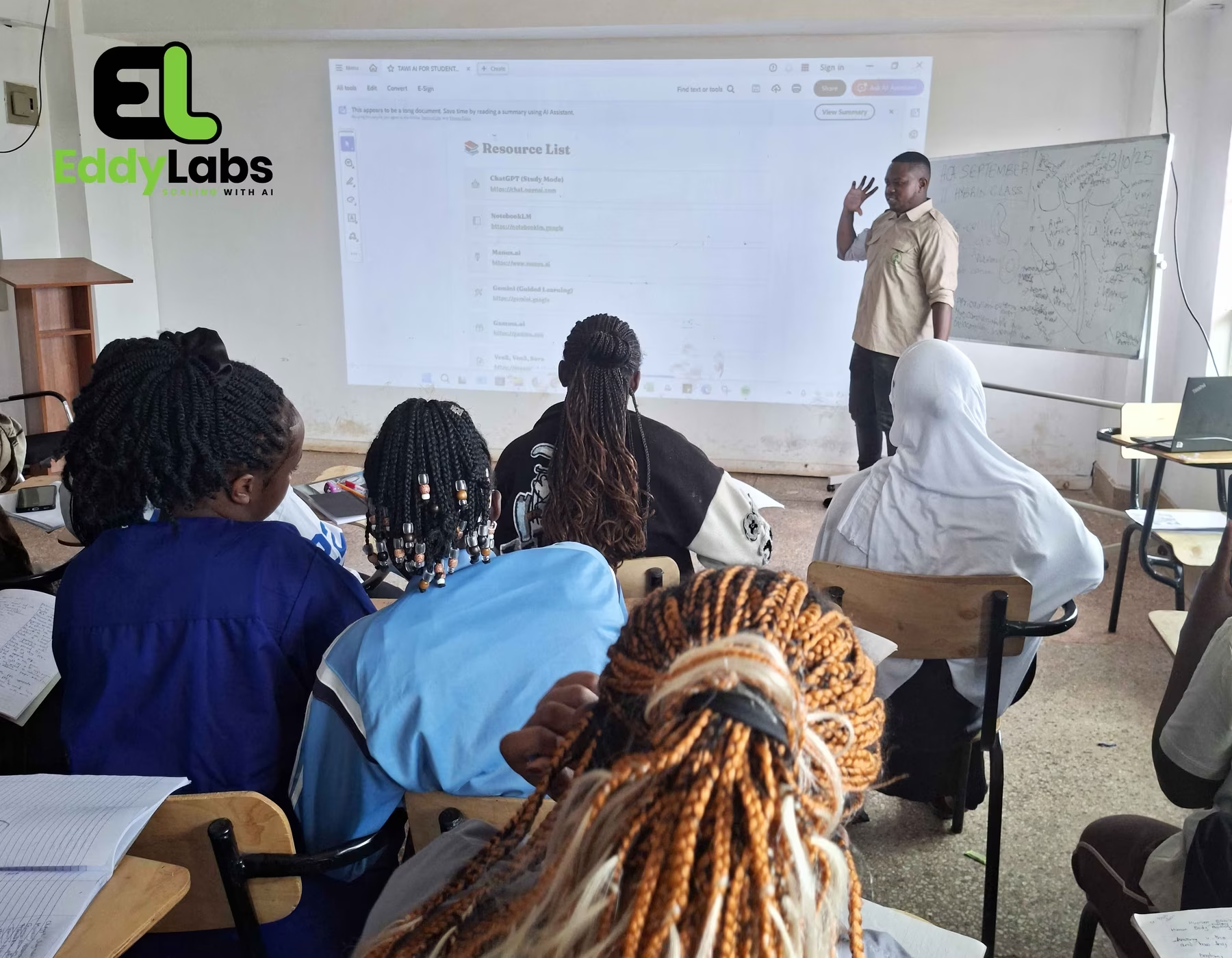
Any AI solution for a Kenyan business has to start from how the business actually runs: on WhatsApp chats, M-Pesa tills, handwritten stock books and the cyber down the road. Most lists of AI use cases are written for companies with clean databases and online checkouts, so the ideas sound impressive and then fall apart at the first duka counter.
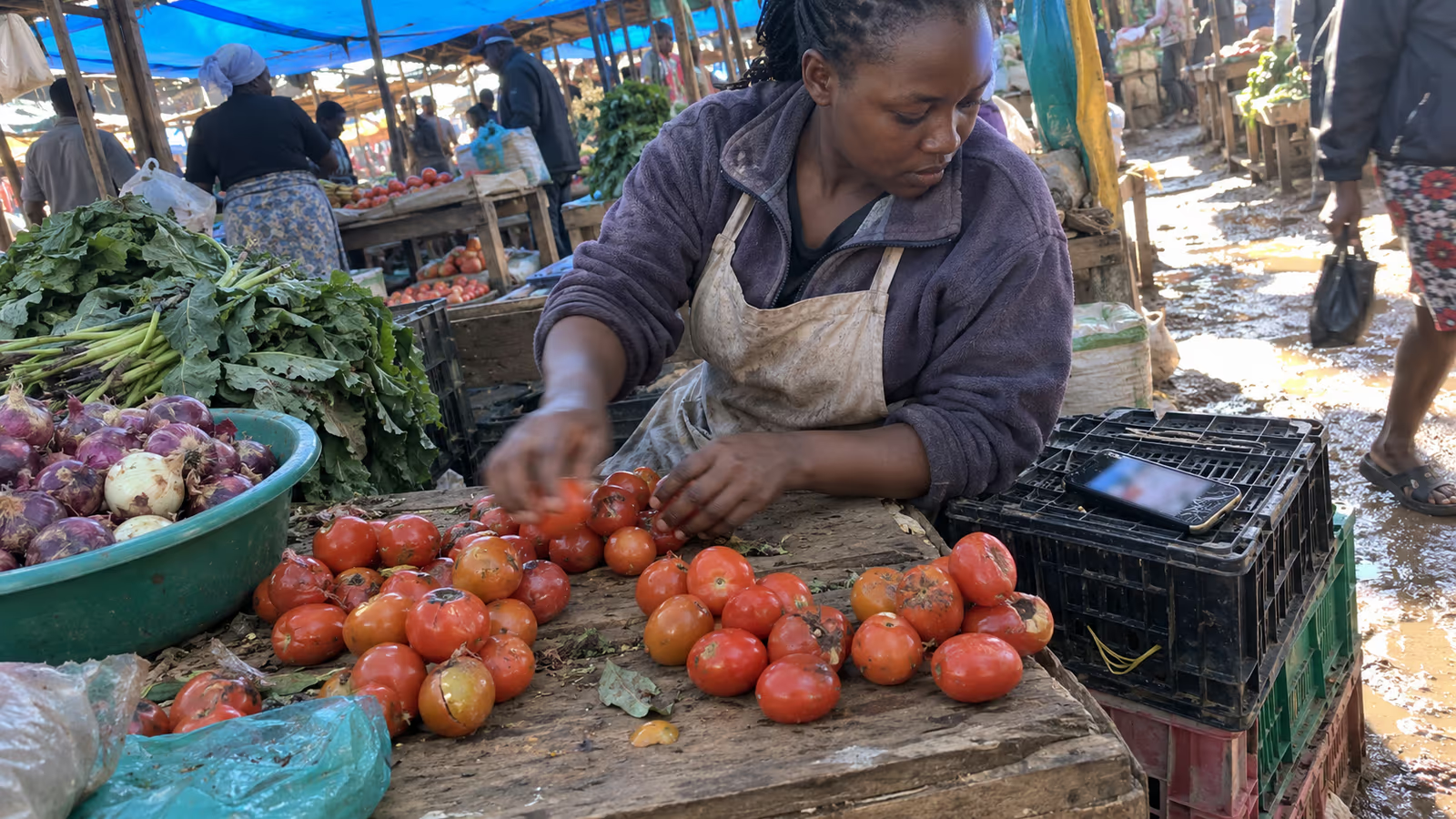
Kenyans are not short of AI experience. In the DataReportal 2026 mid-year update, 97.5% of surveyed internet users in Kenya said they had used an AI tool in the past month, the highest rate of the 54 countries tracked. The gap is between personal use and business use. Asking ChatGPT a question is one thing, and getting AI to stop a stock leak or answer customers at nine at night is another.
This guide covers nine AI solutions we chose by looking at that gap. For each one we describe what happens in Kenyan businesses today, what AI can really do, how to start small and what can go wrong. Where a point rests on research, we link the source, and where it rests on our own observation, we say so.
Disclosure: EddyLabs offers AI strategy, training and automation services, and we link to them where they fit. The other tools, studies and companies in this guide are not connected to EddyLabs, and nobody paid to be included.
How We Chose These AI Solutions
We kept a use case only if it passed three checks. First, the problem has to happen in ordinary Kenyan businesses, not only in big companies. Second, a small business must be able to try the tools today without spending much. Third, we had to be able to say clearly what can go wrong, so you know the risks before you start.
| Use case | What happens in many Kenyan businesses | What you need to start |
|---|---|---|
| Shop records | Many small shops keep few or no records | Photos of your stock book and your M-Pesa statement |
| Reviews and comments | Reviews and price questions go unanswered | Access to your Google Business Profile and social accounts |
| WhatsApp orders | Orders arrive by chat, often while the owner is busy | WhatsApp Business and an up-to-date price list |
| Farming | Feed quality is hard to judge by eye | Daily records of feed and milk or eggs |
| Research | Decisions made on gut feeling | A clear question and time to check sources |
| Cyber cafés | Customers need more than printing | A computer, a printer and AI tools |
| Health | Hard diagnoses and busy clinics | A qualified clinician, every time |
| Software development | Small teams with long backlogs | A code editor with an AI assistant |
| Product photos | Phone photos with mixed backgrounds | The product photos you already have |
Using AI to Track Stock and Money in a Shop
A duka, a mama mboga stall or a hardware shop can be busy all day and still struggle to pay rent at the end of the month, and the owner often cannot say where the money went. The problem is usually missing information rather than missing effort.
The numbers back this up. In the KNBS 2016 MSME survey, 78.9% of unlicensed businesses kept no business records at all, and a 2021 survey by the Kenya Bankers Association found that about three in ten of the enterprises it surveyed kept no financial records. Without records, losses stay invisible. A study of supermarkets in Kisumu found that the main driver of employee theft was simply the opportunity to steal, created by weak monitoring, and a small shop where one attendant handles stock, cash and M-Pesa has even less monitoring than a supermarket.
This is where AI helps, and it does not need a new system. You can photograph the pages of your stock book or your supplier receipts and let an AI tool turn them into a table, then download your M-Pesa till statement and ask the same tool to compare what you bought, what you sold and what was paid. It can point out patterns a busy owner misses, such as a product that keeps running out without matching sales, a day of the week when takings drop or a supplier whose deliveries are often short.
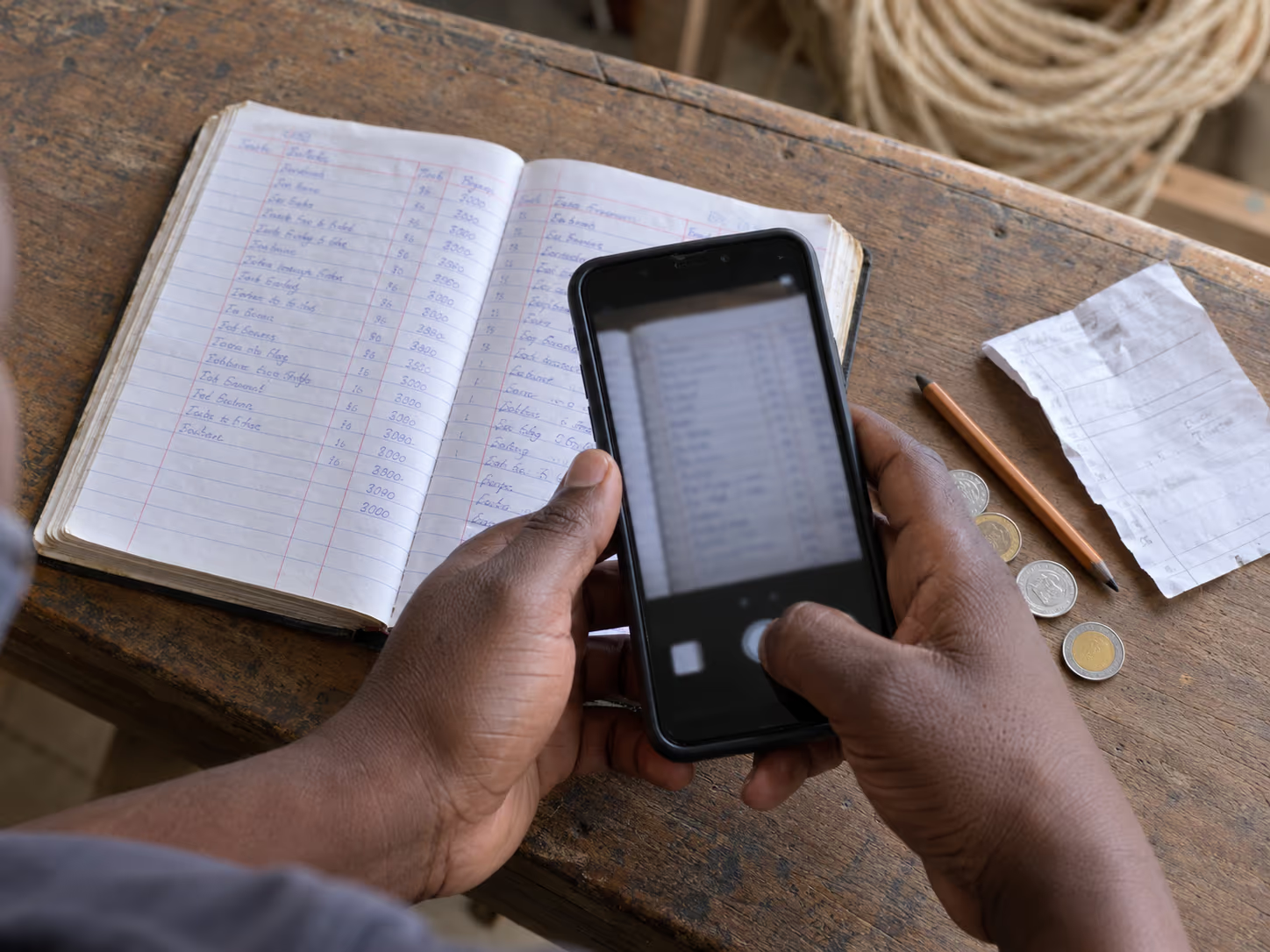
Start with one product line for one month. Record what comes in and what goes out, give the records to the AI each week and ask one question: where does the stock not match the money?
Be careful with what the numbers tell you. A gap between stock and sales can come from theft, but it can also come from spoilt goods, counting mistakes or a supplier who delivered less than you paid for. Check the facts and talk to your staff before you accuse anyone. Records about your staff are also personal data under the Kenya Data Protection Act, 2019, so keep them private and use them only to run the business.
Replying to Reviews and Comments With AI
When we looked through Kenyan business listings on Google and product videos on TikTok, the same pattern kept appearing: reviews with no reply, and comments asking how much a product costs that nobody answered, or answered days later.
Both cost money. Google includes replying to reviews in its own tips for improving local ranking, noting that helpful replies can help a business stand out. Customers notice too: in BrightLocal's 2024 survey of consumers in the United States, 88% said they would use a business that replies to all its reviews, against 47% for a business that replies to none. A comment asking for a price is a buyer at the moment of decision, and if the answer arrives tomorrow they have usually bought elsewhere.
AI can draft a reply to every review in your tone, thanking happy customers and naming the specific problem in a bad one. For comments, a newer type of model makes the sorting fast and cheap. Jev, a decision model released by TypeSafe AI in September 2026, does not write text at all. You give it a message and a set of labels, such as price question, complaint, spam or urgent, and it returns the most likely label with a probability for each one. That lets a system answer price questions straight away from your price list, pass complaints to a person and ignore spam.
Jev is a hosted, paid service. If you would rather run a model on your own computer, Laya from ConvAI Innovations is an open-weight model built on the same idea and released under the Apache 2.0 licence, and older zero-shot classifiers such as facebook/bart-large-mnli can sort messages into labels you describe. If you want this set up for your business, our AI workflow automation service builds it.
These models are still new, and they do make mistakes. TypeSafe says Jev struggles with numbers, dates and messages written to trick it, and the people behind Laya say its basic models need training on your own examples before you can rely on them. Keep a person in charge of complaints, and never let an automatic reply argue with an angry customer in public.
Answering WhatsApp Orders With an AI Chatbot
In Kenya, a large share of online buying never touches a checkout page. The Communications Authority of Kenya's survey for 2024/25 found that WhatsApp handled 20.2% of online order placements, compared with 12% for websites, and that 65.7% of online shoppers paid with mobile money. Even when a customer orders on a website, the confirmation often continues on WhatsApp.
That works until the owner is busy. Think of a flooring contractor who spends the day on site while enquiries pile up on their phone. By the time they reply in the evening, the customer has asked three other contractors and booked the one who answered first.
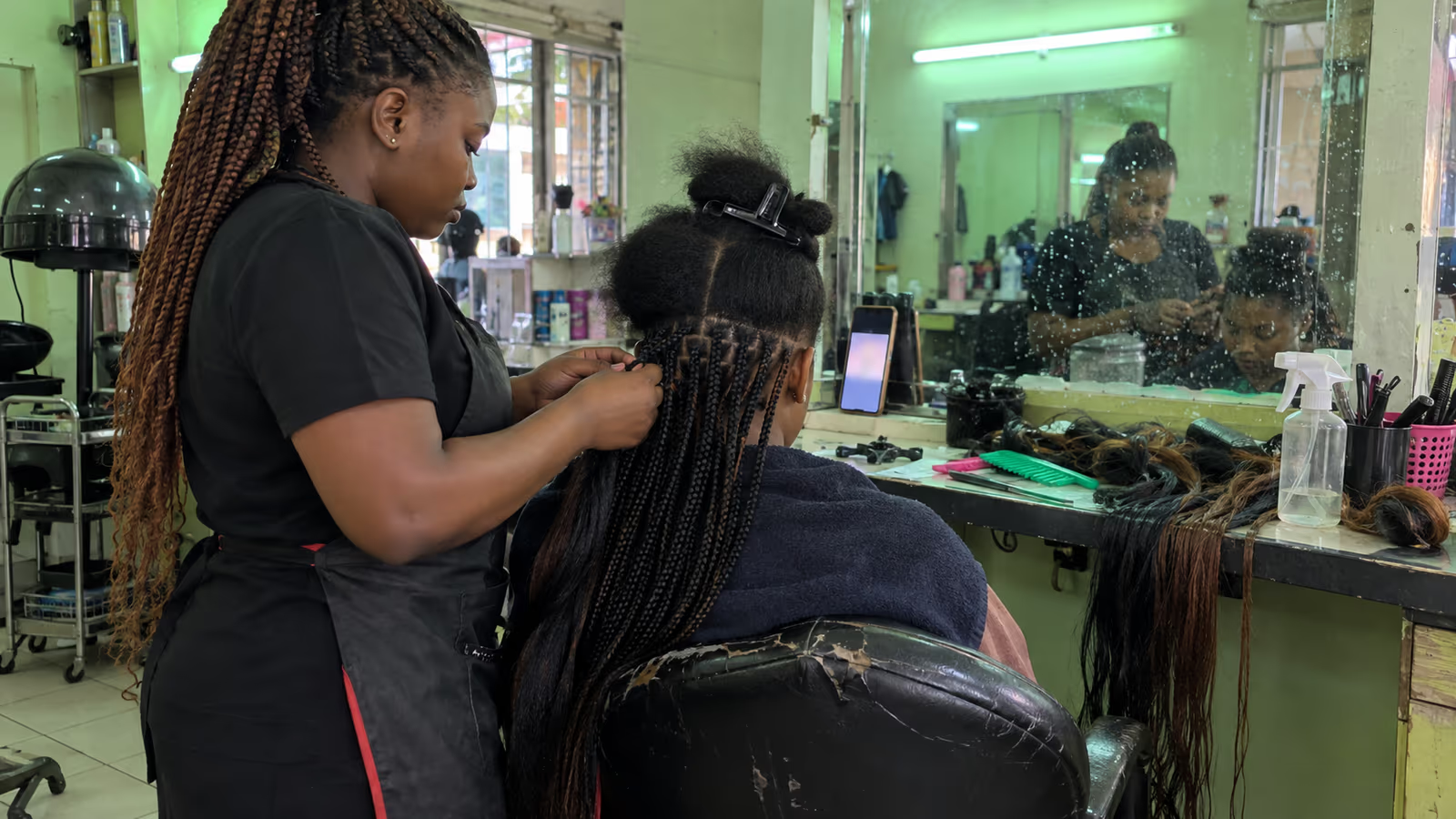
An AI assistant on WhatsApp Business can reply within seconds, share your price list and photos of past jobs, answer common questions, collect the measurements and location for a quote and book a site visit. When it cannot help, it can tell the customer honestly that the owner is on site and will call back by a set time, which is often enough to stop them moving on. If you would rather not set it up yourself, EddyLabs builds this kind of assistant through AI workflow automation.
Only let the assistant quote the prices and promises you have given it, because if it invents a discount or a delivery date, the customer will hold you to it. Tell customers they are chatting with an assistant, make it easy for them to reach a person, and handle their phone numbers and messages in line with the Kenya Data Protection Act, 2019.
How Farmers Can Use AI
Many livestock farmers buy the same feed for years because it is what they have always used, and it is hard to tell good feed from poor feed by looking at it. Research in Kenya shows why that matters.
A University of Nairobi study of urban dairy areas found aflatoxin B1, a toxic product of mould, in 86% of the feed samples collected from farmers, and 67% of those positive samples were above the FAO and WHO limit. A later study across five counties found contamination common in both dairy feeds and milk, and an ILRI analysis cites earlier research linking very high aflatoxin levels in dairy feed to a 25% drop in milk production.
AI cannot see aflatoxin, but it can see the effect of a feed on your animals when you keep simple records. If you write down each day what every cow eats, which bag or supplier the feed came from and how much milk she gives, an AI tool can compare the weeks on one feed with the weeks on another and show you when output falls after a change. Dairy apps used in Kenya, such as DigiCow, already capture feeding, breeding and milk records, which makes this kind of analysis easier.
On the crop side, phone apps can now spot disease from a photo of a leaf. PlantVillage Nuru, developed with Penn State University and IITA, identifies cassava diseases and fall armyworm damage on maize, works offline, and in testing outperformed trained extension officers at diagnosing cassava diseases.
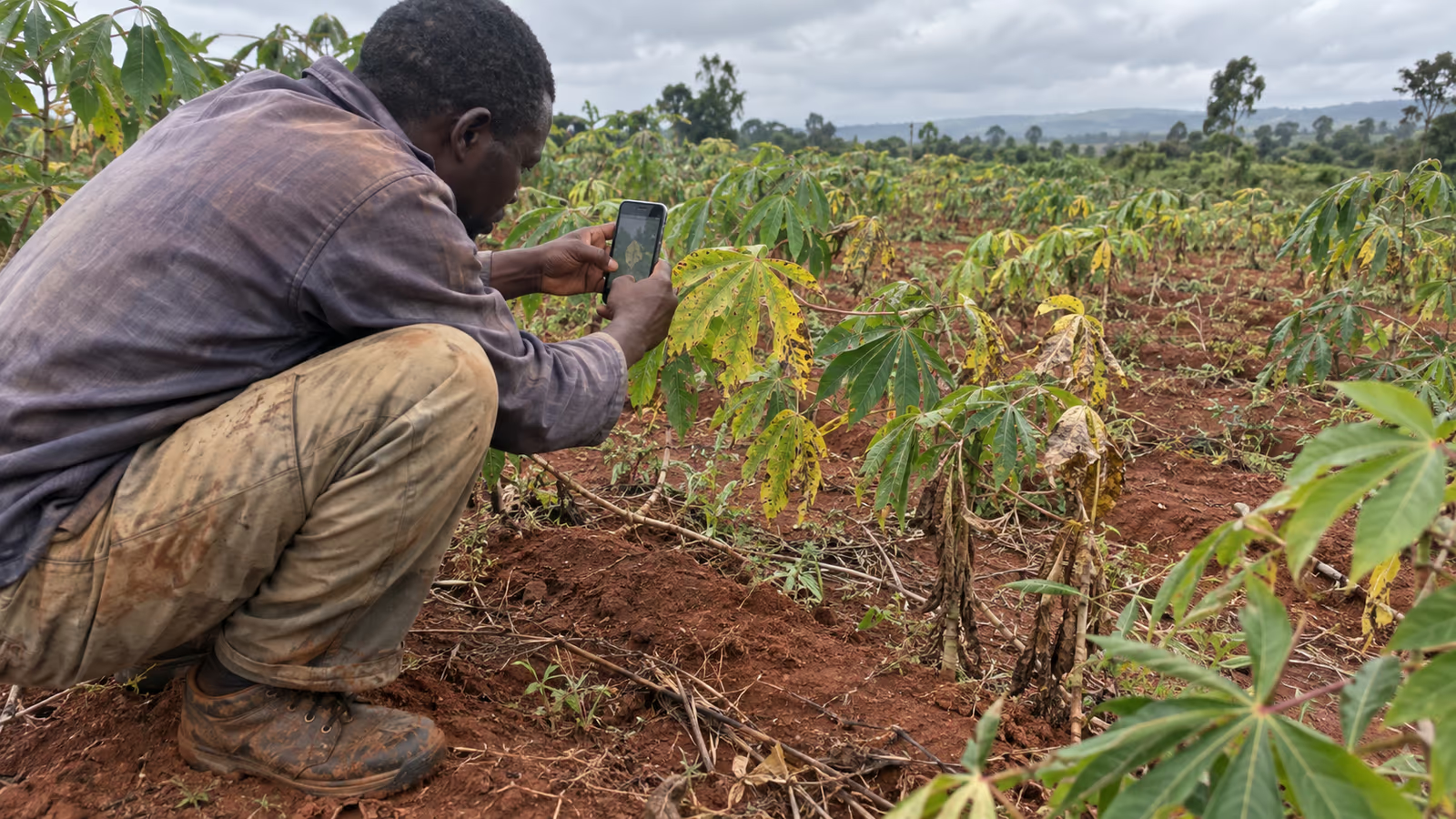
Treat what the records show as a reason to check, not as the final answer. If milk drops after a new feed, have a sample tested at a laboratory before you change supplier, and ask an extension officer to confirm a crop disease before you spray.
Researching a Market With AI
Every business decision rests on research, whether it is a bakery choosing a second branch, an importer checking demand for a new product or a journalist following a story. In practice, many small decisions are made on gut feeling because proper research takes days.
AI research tools shorten that work. Perplexity searches the web and shows its sources, NotebookLM answers questions from documents you upload, and the deep research modes in ChatGPT, Gemini and Claude can read dozens of pages and write a report. A Kenyan business can point them at local sources, such as Kenya National Bureau of Statistics releases, county reports and industry surveys, and ask focused questions about market size, competitors and customer complaints.
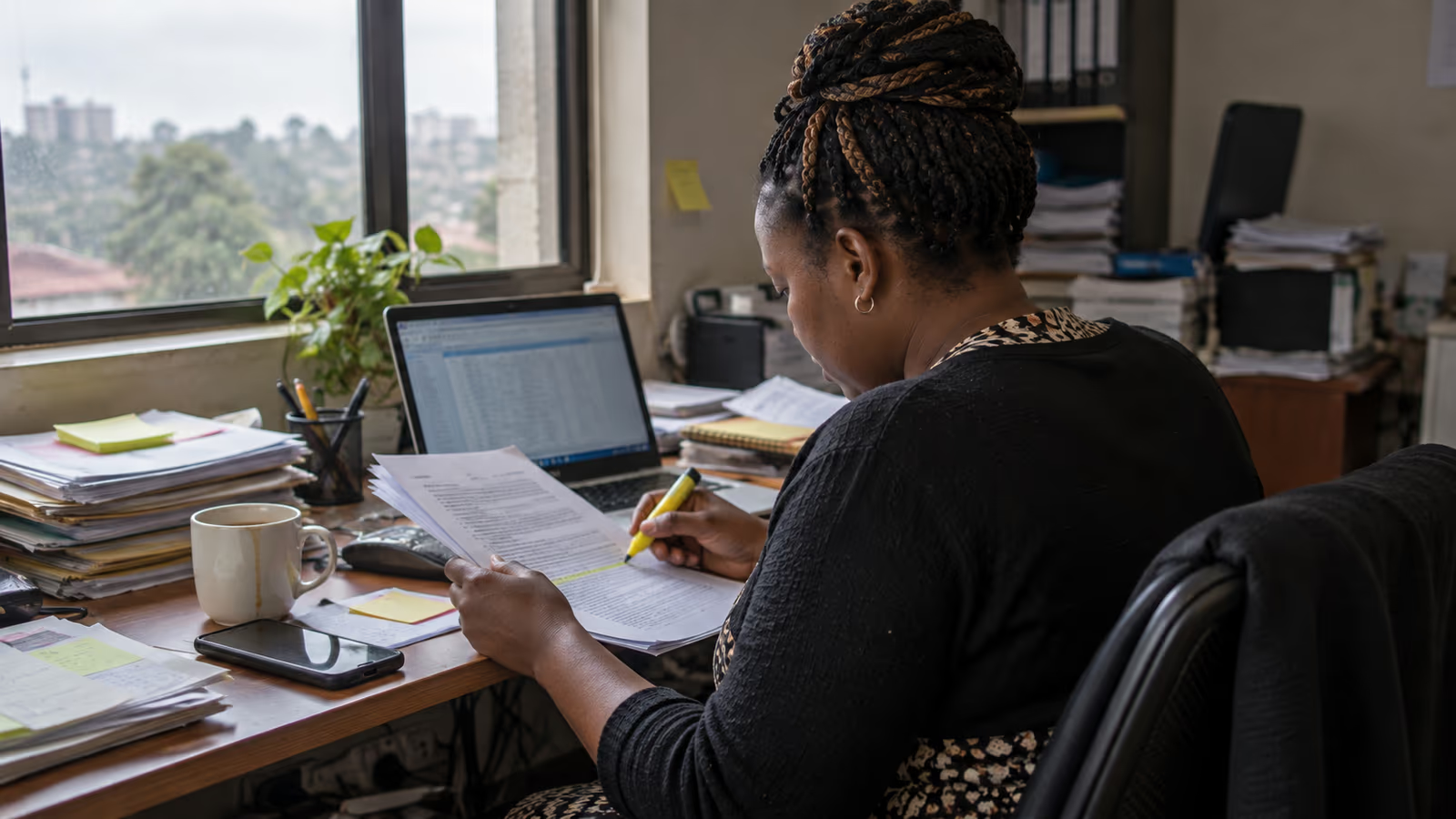
The habit that makes it work is simple: ask a narrow question, ask for the sources and read those sources yourself before you decide. If you want to learn to research this way on your own work, our private AI training covers it.
Do not trust the answers blindly. AI research tools still make up facts and sources, and there is less Kenyan data online than data for bigger markets, so an answer may be based on a foreign source that does not apply here. Check every number against the original document, and if you cannot find a Kenyan source, ask people who know the market.
How Cyber Cafés Can Use AI
Cyber cafés are part of daily life in Kenya, and much of their income still comes from printing, photocopying and online applications. AI gives them more to sell. The Competency Based Curriculum asks learners for projects, portfolios and practical tasks that often need printed pictures, charts or written material from home, and many families turn to the nearest cyber for help.
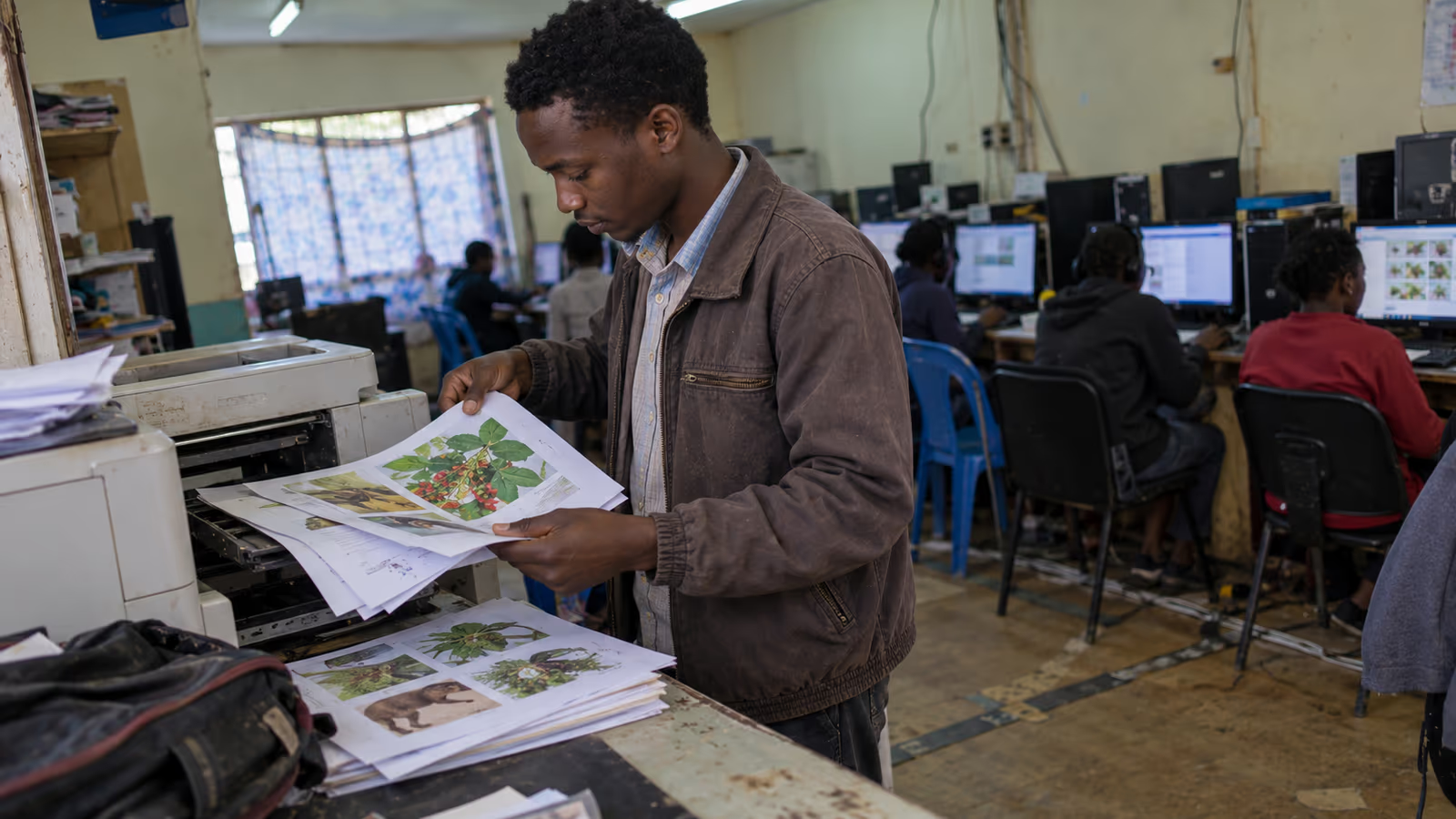
With AI image tools, a cyber can create a picture that fits each learner's assignment instead of printing the same search result for every child in the class, such as an illustration of the water cycle with the labels the teacher asked for, or a drawing of a footballer in the learner's favourite team colours. AI writing tools can help draft simple descriptions, and the attendant can adjust the language to the learner's grade.
The second opportunity is documents. Recent OCR models, which read text from images, can turn a photo of a handwritten form, an old typed letter or a receipt into editable text in minutes. Mistral OCR 4, released in June 2026, supports 170 languages, and DeepSeek-OCR is an open model that can run on the cyber's own computer, which matters when customers bring personal documents. From these, a cyber can offer typing, translation and form filling priced per page.
Check every AI picture before you print it for a child, because it can get things wrong, such as labelling the parts of a plant incorrectly. Avoid realistic pictures of real people, like a famous footballer's face, because that can break their rights and confuse learners about what is real. Never upload a customer's ID card or certificates to an online tool without their permission, and use tools that run on your own computer for anything private.
How AI Can Help in Healthcare
Some of the most striking AI stories come from health. In the United States, a mother entered her son's symptoms and MRI notes into ChatGPT after 17 doctors over three years had not found the cause of his pain. It suggested tethered cord syndrome, a neurosurgeon confirmed the diagnosis and the boy had surgery, as the Today show reported.
The stronger evidence comes from Kenya. Penda Health, which runs primary care clinics in Nairobi, studied an AI copilot called AI Consult across 39,849 patient visits in 15 clinics. Clinicians with the tool made 16% fewer diagnostic errors and 13% fewer treatment errors than clinicians without it. The important detail is how it was used: the AI checked the clinician's work in the background, and the clinician stayed in charge of every decision.
For clinics, pharmacies and health businesses, that is the model to copy. Use AI as a second check on records, prescriptions and follow-up reminders, with a qualified person making the decision every time.
Health note: AI is not a doctor. In a 2026 University of Oxford study published in Nature Medicine, nearly 1,300 members of the public who used AI chatbots to assess medical scenarios made no better decisions than people who used ordinary searches or their own judgement, partly because they did not know what to tell the chatbot. In a separate evaluation, Penda's clinicians also reported that the tool sometimes suggested medicines that are not available in Kenya. Use AI to prepare better questions for your doctor, never to replace one.
How Developers Can Use AI
Kenya has one of the fastest growing developer communities in Africa. GitHub counted more than 393,000 developers in Kenya in 2024, a rise of 33% in a year, and its 2025 Octoverse report found that 80% of new developers on GitHub use Copilot in their first week.
For a small Kenyan team, AI assistants are most useful on the repetitive work around the product: writing tests, explaining an unfamiliar codebase, drafting documentation and producing a first version of standard integrations, such as connecting an app to M-Pesa through Safaricom's Daraja API. That leaves the team's time for the parts that need local knowledge, such as how customers actually pay and what the app should do when the network drops.
Code written by AI can look right and still have security holes, so check it the way you would check a new colleague's work. Never paste API keys, customer data or M-Pesa passwords into a chat tool, and check the licence of any code the assistant may have copied from somewhere else.
Making Better Product Photos With AI
Most small online sellers in Kenya shoot their products on a phone, in whatever light and on whatever surface is nearby. Each photo may be sharp on its own, but put twenty of them on one page or WhatsApp catalogue and the mix of backgrounds makes the shop look cluttered next to brands that use one clean, consistent look.
AI photo tools fix this in batches. Google's Product Studio, free inside Merchant Center, can remove backgrounds and increase image resolution, and dedicated tools such as Photoroom can apply the same background, lighting and framing to a whole catalogue from ordinary phone photos. In Photoroom's own 2026 survey of 1,356 small online sellers, 59% believed poor product photos had cost them sales.
Make sure the photo still shows the real product. AI can quietly change a colour, a texture or a logo when it creates a new scene, and a customer who receives something different from the photo will not buy from you again. Use AI to clean up the background and the light, compare every edited photo with the actual item, and keep made-up lifestyle scenes separate from the main product photo.
Common Questions About AI for Small Businesses
Which AI use case should a small Kenyan business start with?
Start with the use case closest to where you lose money or customers today. For most shops that means records, and for most service businesses it means slow replies on WhatsApp. If you are unsure, AI strategy consulting helps you choose and plan the first step.
Do I need a website to use AI in my business?
No. Several use cases in this guide work entirely on WhatsApp, a Google Business Profile and a phone. A website helps later, but it is not where you need to start.
Is it legal to use customer data with AI in Kenya?
It can be, if you follow the Kenya Data Protection Act, 2019. Collect only what you need, tell customers how you use their data, keep it secure and avoid uploading personal documents to tools you do not control.
Will AI replace my staff?
In the use cases here, AI handles repeated steps and people make the decisions. Most businesses use it to free staff for customers and checks, and training your team is the fastest way to get value from it, which is what corporate AI training is for.
How much does it cost to start using AI in a business?
Many of the tools in this guide have free plans or low monthly prices, so you can test one use case for very little. The bigger cost is the time it takes to set the use case up properly and check that it works. If you are deciding whether to train your team first, read whether small businesses in Kenya should invest in AI training.
Can EddyLabs set up an AI solution for my business?
Yes. EddyLabs builds WhatsApp chatbots and AI workflows for businesses in Kenya, and most systems take 2 to 8 weeks. The first call is free and takes 30 minutes, and you agree the scope and price before any work begins. See AI workflow automation for how it works.
How to Get AI Set Up in Your Business
Pick one use case, run it for a month and measure the result in shillings or in hours. One small win that you can measure will teach you more than ten tools you only tried once.
If you would rather have it done for you, EddyLabs can set it up. AI workflow automation is where we build the chatbot or workflow for your business, usually in 2 to 8 weeks, and AI strategy consulting helps you choose the right use case first if you are not sure. Both start with a free 30-minute call, and you agree the scope and price before any work begins. To build your team's judgement first, read our guide to AI literacy in Kenya.
If you would rather learn to do it yourself, our AI for business workshops let you and your staff work through these use cases on your own tasks. We run them anywhere in Kenya, and we are based in Thika, so AI training in Thika and Kiambu can happen at your own premises.
Sources
- DataReportal 2026 mid-year update, reported by ITWeb
- KNBS 2016 MSME Survey Basic Report
- Kenya Bankers Association MSMEs Survey 2021
- Employee theft in Kisumu supermarkets study
- Google: tips to improve your local ranking
- BrightLocal Local Consumer Review Survey 2024
- TypeSafe AI, makers of Jev
- Simon Willison on Jev and decision models
- Laya open-weight decision model on GitHub
- facebook/bart-large-mnli on Hugging Face
- Communications Authority survey on online shopping
- Aflatoxin in Kenyan animal feeds and milk (Kang'ethe and Lang'a, 2009)
- Aflatoxin in feeds and milk from five Kenyan counties
- ILRI: direct market costs of aflatoxins in the Kenyan dairy value chain
- FAO: DigiCow dairy app
- IITA: PlantVillage Nuru
- Mistral OCR 4 announcement
- DeepSeek-OCR on GitHub
- Today show: ChatGPT and the tethered cord diagnosis
- OpenAI and Penda Health: AI clinical copilot study
- Clinician experiences of AI Consult at Penda Health (medRxiv)
- University of Oxford: risks in AI chatbots giving medical advice
- GitHub: developer growth in Kenya
- GitHub Octoverse 2025
- Google Merchant Center: Product Studio
- Photoroom survey of small online sellers
- Kenya Data Protection Act, 2019