

An AI strategy for businesses in Kenya should start with the country's own plan, the Kenya Artificial Intelligence Strategy 2025 to 2030, because it shows where money, rules and skills are heading. It is the government's five-year plan for how Kenya will build, use and govern artificial intelligence, and it wants the country to become Africa's leading hub for AI, with local data, local models and local talent.
Most people know the strategy only from launch headlines, and few have read the document itself. That matters, because the details decide who pays for what, which sectors come first and what rules businesses should expect. A strategy is also not a law, so it does not tell you on its own what you must do today.
For this guide we read the full strategy, its implementation plan and budget and the main events since the launch, including the draft AI policy, the AI Bill and the stalled Olkaria data centre. Sources are linked in the text and listed at the end, and where we give our own opinion, we say so.
Disclosure: EddyLabs offers AI strategy, training and automation services, and we link to them where they fit. The government bodies, companies and researchers in this guide are not connected to EddyLabs.
What Is Kenya's National AI Strategy?
It is a policy plan from the Ministry of Information, Communications and the Digital Economy. Cabinet Secretary William Kabogo launched it at KICC in Nairobi on 27 March 2025, after a draft was published for public validation in January 2025. It sits under Vision 2030, the Bottom-up Economic Transformation Agenda and the National Digital Master Plan 2022 to 2032.
A national AI working group and a steering committee wrote it between April 2024 and March 2025, with funding from GIZ and a readiness assessment based on the UNESCO method, according to a UNESCO case study. The team held interviews, focus groups, town halls in different regions and an online survey, so the document reflects more voices than a typical ministry paper.
The vision is ambitious. Kenya wants to grow the economy with AI, become a net exporter of AI technology and services, and build a data governance system that lets people use data safely. The strategy also says it will deal with job losses before they happen, which is a promise worth watching.
The Three Pillars of the Strategy
At the launch, the ministry described the strategy as three pillars. Everything else in the document supports one of them.
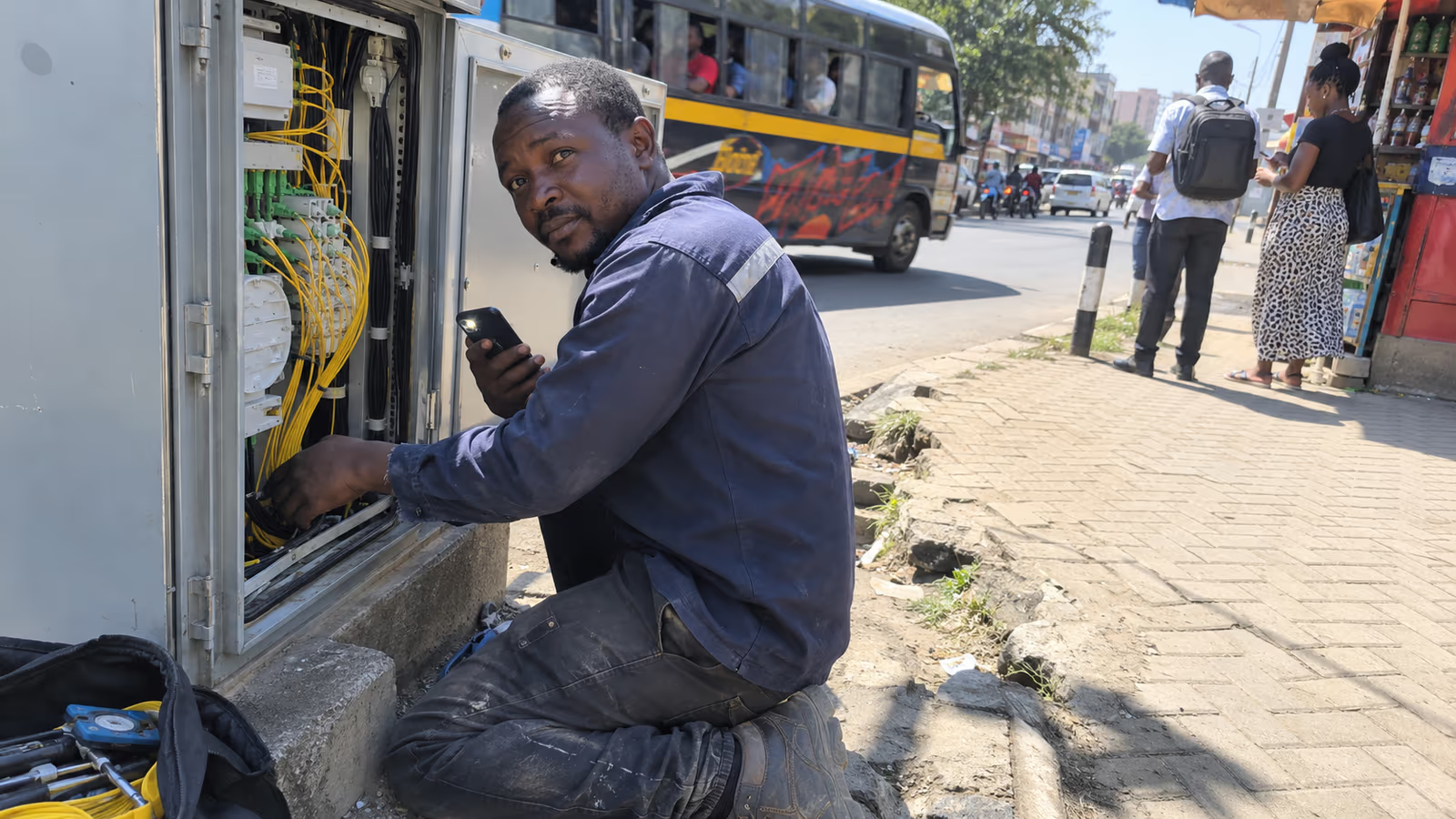
The first pillar is AI digital infrastructure, which means the physical base that AI needs: data centres, computing power, broadband, green energy to run it all and cybersecurity to protect it. The strategy plans three AI-capable data centres built to an international standard within five years.
The second pillar is data and AI governance. AI learns from data, and Kenya does not yet have enough clean, shared and well-labelled data about itself. The plan includes a national data policy, rules for sharing data between institutions, common data standards and local data labs for researchers.
The third pillar is AI research, innovation and commercialisation. It covers research centres in different regions, support for startups, and a market for Kenyan AI products, including a review of public procurement rules so that government buys more locally built AI.
The Seven Areas the Strategy Covers
Inside the document, the three pillars become seven themes, each with goals, flagship projects and targets. The table gives one real example from each theme.
| Area | What it promises | One flagship project |
|---|---|---|
| AI digital infrastructure | Computing power, data centres, green energy and cybersecurity | Three AI-capable data centres within five years |
| Data | A national data policy and safe ways to share data | Local data labs with clean datasets for researchers |
| AI research and innovation | More local research and a market for Kenyan AI products | Government buying of locally developed AI |
| Talent | AI skills from primary school to university and work | AI awareness and basic skills in school curricula |
| Governance | Policies, safety standards and updated laws | A national AI and emerging technologies policy |
| Investment | More private and public money for AI | An AI innovation fund and AI special economic zones |
| Ethics, equity and inclusion | Fair AI that works in local languages | A public record of ethical AI use cases |
The strategy then picks 13 priority areas to start with: edge computing, AI-capable data centres, training data for priority sectors, AI research, the innovation ecosystem, deep AI skills, an AI policy, AI standards, private investment, public investment, Kenya as an AI investment destination, responsible AI, and national values in AI.
Which Sectors the Strategy Puts First
Eight sectors come first: healthcare, education, agriculture, public service delivery, security, micro, small and medium enterprises, the creative sector, and sustainability. The government says it will choose projects in these sectors by how practical they are, how much difference they make and how much data already exists.
Some projects are already named, and most of them depend on Kenyan languages. In health, the plan describes a maternal health chatbot that answers pregnancy questions in local dialects and a wider disease advice system. In education, it names tutoring systems and teacher training in several languages.

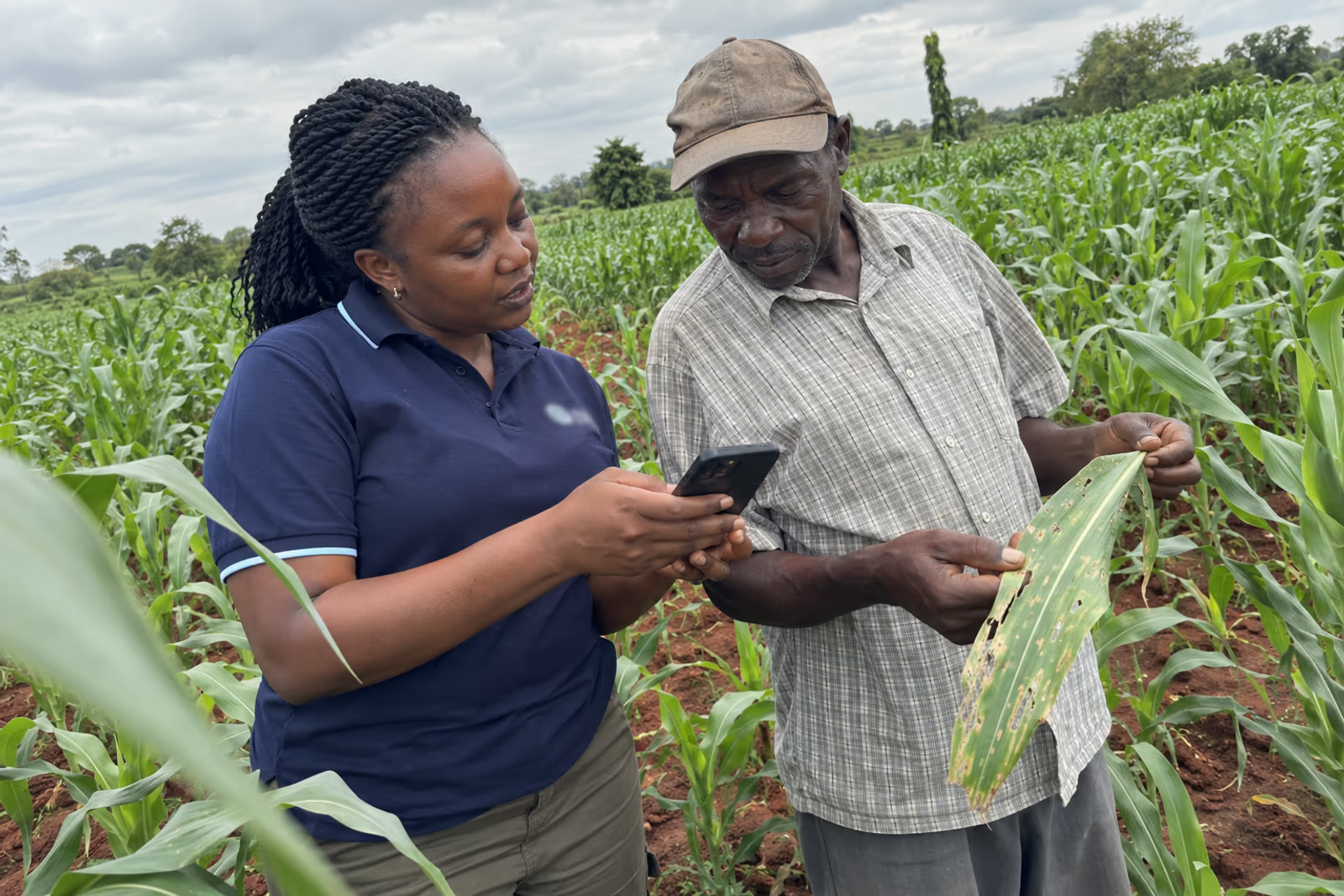
For farmers, the plan describes turning existing farm advice into audio in local languages and building AI tools that recommend fertiliser. For government, it describes chatbots that help citizens in more than one language, and for creatives, a national digital platform to reach more buyers.
How Much the Strategy Costs and Who Pays
The implementation plan says the strategy will cost about KES 152 billion over five years. That is about KES 27 billion in the first year and about KES 32 billion a year from the third year on. More than half of the money is for infrastructure.
| Area | Five-year budget | Share |
|---|---|---|
| AI digital infrastructure | KES 87.4 billion | 57.5% |
| Data | KES 17.0 billion | 11.2% |
| Investment | KES 5.3 billion | 3.5% |
| Governance | KES 4.2 billion | 2.7% |
| Ethics, equity and inclusion | KES 2.1 billion | 1.4% |
| Research, innovation and talent (together) | KES 36.0 billion | 23.7% |
The more important question is where the money comes from. For infrastructure, the plan expects about 37% from government, 47% from foreign private partners and 16% from local private partners. In other words, most of the largest budget line depends on companies choosing to invest.
The plan's investment target counts a USD 1 billion commitment from Microsoft, G42 and partners in the first year and aims for USD 10 billion of private investment by the fifth year. It also proposes an AI and emerging technology fund financed by 3% of the National Research Fund, a programme to train at least 1,000 investors to judge AI startups, and a campaign to showcase at least 50 successful tech startups.
What Has Happened Since the Launch
The biggest setback is the data centre. In 2024, Microsoft and G42 announced a USD 1 billion investment package for Kenya, built around a geothermal-powered data centre at Olkaria near Lake Naivasha, and the strategy counts that commitment in its investment target. In May 2026, President Ruto announced its suspension, and DCD reports that the project stalled over the power it needed. Al Jazeera has also covered concerns about water for the communities around Naivasha.
Policy work has moved forward. The ministry started an AI and emerging technologies policy in November 2025 with KICTANet and a working group, and published a draft policy in July 2026. The draft names a National AI and Emerging Technologies Steering Committee to lead implementation, plans a sovereign cloud and computing strategy to reduce dependence on foreign infrastructure, and proposes an AI governance bill within 18 months.
Kenya's place in the Oxford Insights Government AI Readiness Index has also improved, from 101st in 2023 to 65th in the 2025 index. The 2025 index changed its method, though, so the jump is not a like-for-like comparison. In September 2026, the ministry said its focus is now moving from policy to practical action.
Is There an AI Law in Kenya?
No, not yet. The strategy is a plan, the AI policy is still a draft, and the only AI bill so far has stalled. The strategy itself prefers light rules first, using standards and regulatory sandboxes, and a full AI Act only "as AI matures in Kenya".
The bill was the Artificial Intelligence Bill, 2026, a private member's bill from Senator Karen Nyamu. It proposed an Office of the AI Commissioner, four levels of risk loosely modelled on the EU AI Act and a public register of high-risk systems, and Bowmans noted that it would apply to any business that runs AI systems in Kenya. In October 2026, the Senate ICT committee recommended that the Senate not proceed, warning that it might regulate AI too broadly, too early and too punitively.
That does not mean AI is unregulated. The Kenya Data Protection Act, 2019 already applies to any AI tool that uses personal data, and section 35 gives people the right not to be subject to a decision made only by automated processing when it seriously affects them. The Computer Misuse and Cybercrimes Act, intellectual property law and consumer protection law also apply.
Where the Strategy Falls Short
The strategy is honest about Kenya's weak points, which is to its credit. It admits a serious shortage of advanced AI experts, underfunded research, regulators that work separately instead of together, and many Kenyans stuck in entry-level AI jobs such as data labelling with no clear path upward. Its own risk table rates three risks as high: too little public money, governance problems such as procurement irregularities, and weak coordination with county governments.
In our view, the biggest weakness is the funding model. More than half the budget is infrastructure, most of that is expected from private and foreign partners, and the largest private commitment has already stalled. If that money does not arrive, the data centres slip, and the research and local models that depend on local computing power slip with them.
The second weakness is energy and water. AI computing needs reliable power, and the Olkaria project shows that Kenya's grid and its communities will both have a say in where data centres go. The strategy mentions green energy, but it does not settle these conflicts.
Building an AI Strategy for Your Business
For most organisations, the strategy changes nothing overnight, but it does show the direction of travel. Small and medium enterprises are one of the eight priority sectors, the government plans to buy more locally built AI, and rules on standards, safety and data sharing are coming, even if the first bill failed.
Organisations do not need to wait for a law to prepare. Four steps make sense now: know which AI tools your staff already use, write a short AI use policy, keep a person responsible for any decision that affects a customer or employee, and check that your use of data meets the Data Protection Act.

If you build AI products, watch the procurement review and the innovation fund closely, because they could open the government as a customer. If you would like help turning all this into a plan for your own organisation, AI strategy consulting starts with where AI fits in your work, AI leadership training helps your directors decide where to invest, and corporate AI training helps your team use it safely.
What It Means for Students, Workers and Job Seekers
The talent theme reaches furthest into daily life. It plans AI awareness and basic skills in school curricula, common AI courses in universities and colleges, a training programme for AI trainers, and a stronger Presidential Digital Talent Programme.

On jobs, the evidence is calmer than the headlines. The World Bank's World Development Report 2026 finds that 4.5% of jobs in low and middle income countries are at risk of automation by generative AI, against 14.2% in high-income countries, while 16.2% could become more productive with AI. The report's Kenyan example is the judiciary, which uses AI to assign more than 10,000 court cases a year to more than 1,500 mediators.
In September 2026, Principal Secretary Stephen Isaboke cited World Bank analysis that about 87% of Kenyan workers are in jobs with low direct exposure to AI, 9% are in exposed jobs where AI is more likely to help them, and 4% face a greater risk of losing work. The practical lesson is the same for all three groups: people who learn to use AI well will do better than people who wait. Our guide to AI literacy in Kenya is a good place to start.
Common Questions About Kenya's AI Strategy
When was Kenya's AI strategy launched?
The Kenya Artificial Intelligence Strategy 2025 to 2030 was launched on 27 March 2025 at KICC in Nairobi, after a draft was published for public validation in January 2025.
What are the three pillars of Kenya's AI strategy?
AI digital infrastructure, data and AI governance, and AI research, innovation and commercialisation. They are supported by work on talent, governance, investment, and ethics, equity and inclusion.
How much will the Kenya AI strategy cost?
The implementation plan estimates about KES 152 billion over five years, with more than half for digital infrastructure. The plan expects most of the infrastructure money to come from private and foreign partners rather than the government.
Does Kenya have an AI law?
Not yet. The AI policy is still a draft and the Senate ICT committee recommended against the Artificial Intelligence Bill, 2026. The Data Protection Act, 2019 already applies to AI tools that use personal data.
What should a business do about the AI strategy now?
List the AI tools your staff use, write a short AI use policy, keep a person responsible for decisions that affect people, and check your data use against the Data Protection Act. AI strategy consulting can help you turn this into a plan.
Will AI take jobs in Kenya?
Some, but fewer than headlines suggest. The World Bank estimates that 4.5% of jobs in low and middle income countries are at risk from generative AI, and that more jobs could become more productive with it than could be lost.
How to Prepare Your Organisation
Do not wait for the law to be finished. Start with the four steps above, choose one task where AI could save real time, and train the people who will use it before you buy anything new.
If you would like help, AI strategy consulting gives you a plan in 4 to 6 weeks, and the first call is free and takes 30 minutes. For practical ideas you can try this month, read our guide to AI solutions for small businesses in Kenya.
Sources
- Kenya Artificial Intelligence Strategy 2025 to 2030 (Ministry of ICT)
- Kenya AI Strategy implementation plan and budget (Ministry of ICT)
- Ministry of ICT: launch of the strategy at KICC
- UNESCO case study on Kenya's AI strategy
- Draft Kenya AI and Emerging Technologies Policy, July 2026
- KICTANet on the AI policy process
- KICTANet memorandum on the Artificial Intelligence Bill
- Bowmans: Artificial Intelligence Bill, 2026
- The Star: Senate committee rejects the AI Bill
- ThinkGeoEnergy: Kenya suspends the Olkaria data centre
- DCD: Microsoft and G42 data centre stalled over power
- Al Jazeera: AI ambitions and Naivasha's water
- Ministry of ICT: from policy to practical action
- Oxford Insights Government AI Readiness Index 2025
- World Bank: World Development Report 2026
- KBC: Kenya backs initiatives to secure jobs amid AI disruption
- Kenya Data Protection Act, 2019