
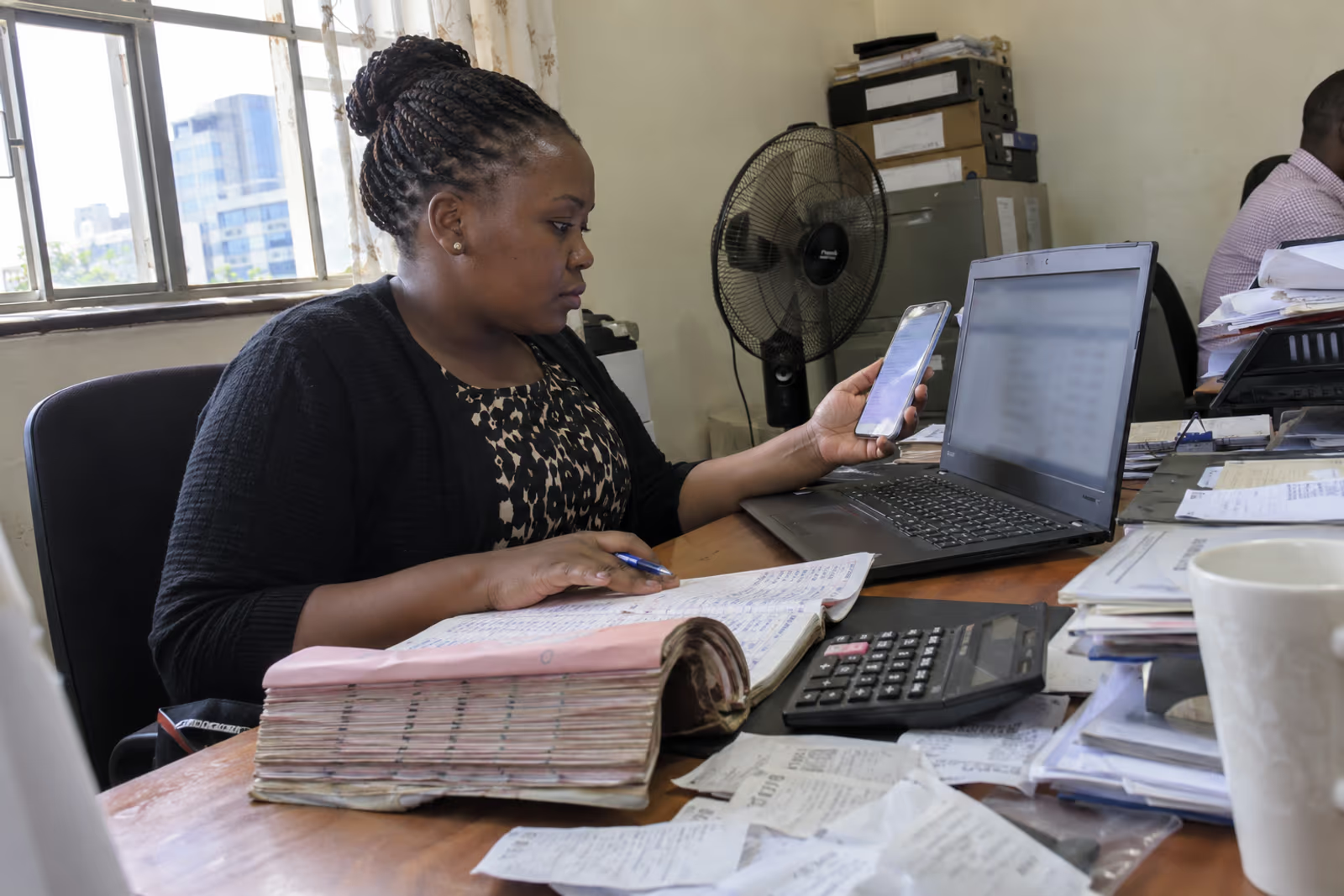
Business process automation in Kenya usually starts with the same few jobs: matching M-Pesa payments to customers, answering the same WhatsApp questions all day, typing invoices into eTIMS and chasing people who owe money. These jobs are repeated, they follow a pattern and they eat hours that owners and staff could spend on customers.
Automation means letting software do those steps for you. Until recently, it could only follow fixed rules, so it broke the moment a customer typed the wrong account number or sent a voice note. AI changes that, because it can read messages, documents and photos and make a first judgement, which is why so many businesses are looking at automation again.
This guide explains what Kenyan businesses automate first, what it costs, when you can do it yourself and what goes wrong. It uses Kenyan prices and rules where we could confirm them, with sources linked in the text and listed at the end.
Disclosure: EddyLabs builds AI workflows and chatbots for businesses, and we link to that service where it fits. The tools, companies and researchers in this guide are not connected to EddyLabs.
What Is AI Automation?
AI automation is software that does a repeated task for you, with AI handling the parts that need reading or judgement. The automation moves information from one place to another, and the AI understands what the information means.
Take a customer who pays by M-Pesa but types "Jane order" instead of the invoice number. A rule-based system cannot match that payment, so it waits for a person. An AI step can read the name, the amount and the time, suggest the most likely invoice and ask a person to confirm only when it is unsure.
| Rule-based automation | AI automation | |
|---|---|---|
| What it does well | The same steps every time, exactly as set up | Messages, documents and requests that vary |
| Example | Send a receipt when a payment arrives | Read a WhatsApp message and work out what the customer wants |
| When it fails | Anything outside its rules | It can sound confident and still be wrong |
| What it needs from you | Clear rules | Clear rules, examples and a person who checks |
Most good systems use both. Rules do the predictable steps cheaply and reliably, and AI handles only the messy part in the middle.
What Kenyan Businesses Automate First
The best first tasks are the ones you repeat every day, that follow a pattern and that cost you money or customers when they are late. Six tasks are good places to start in most Kenyan businesses.
| Task | What gets automated | Where AI helps |
|---|---|---|
| M-Pesa payments | Recording payments and matching them to invoices | Payments with wrong or missing references |
| WhatsApp replies | Prices, opening hours, order status | Understanding free-form questions and voice notes |
| Invoices and eTIMS | Creating tax invoices from sales | Reading supplier invoices and receipts |
| Documents | Filing delivery notes and forms | Reading scanned or photographed paper |
| Stock | Alerts when stock runs low | Spotting unusual patterns in sales |
| Reminders | Payment and loan reminders | Writing the right message for each customer |
Automating M-Pesa Payments and Reconciliation
For many businesses, reconciliation is the job that eats the most time. Someone downloads the M-Pesa statement, opens the sales records and matches each payment by hand, usually late in the evening.
Safaricom's Daraja API lets your own system receive payment details the moment they arrive, send money out to customers or suppliers, and check balances and transaction status. Noria Technologies' integration guide recommends a daily job that compares your records with the M-Pesa statement and alerts you when they drift apart, which is the heart of automated reconciliation.
AI earns its place on the payments that do not match. It can suggest the most likely invoice for a payment with a wrong reference and explain why. Keep a person to approve those suggestions, because a wrong match means a customer gets a reminder for a bill they already paid.
Automating WhatsApp Replies and Orders
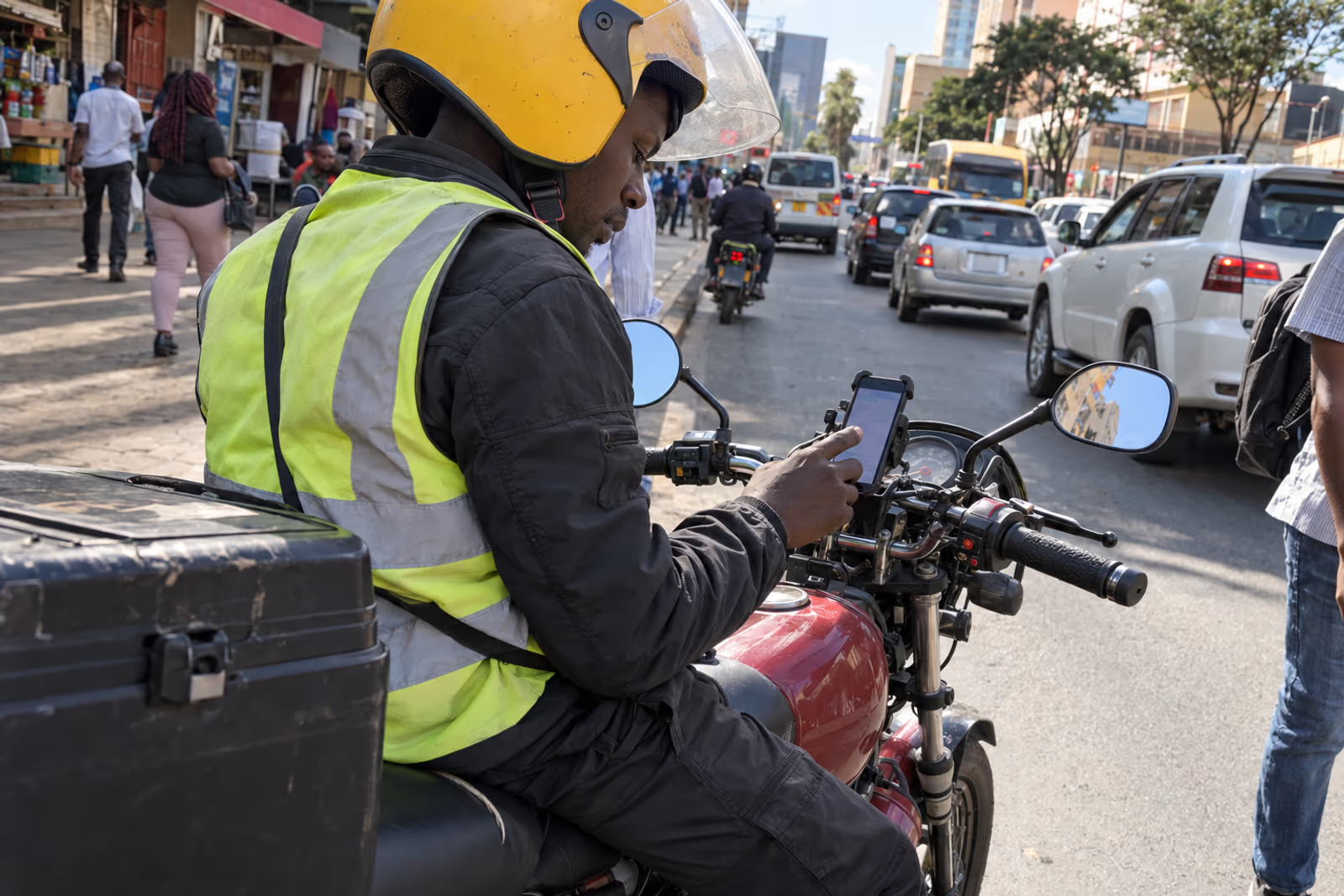
Customers often message a business on WhatsApp instead of calling, and the same questions arrive all day. An automated assistant can answer prices and opening hours, take order details, send order updates and pass harder questions to a person.

To automate replies at scale, you need the WhatsApp Business Platform, which works differently from the free WhatsApp Business app on your phone. The platform charges per message, and the rules changed on 1 October 2026, so check the costs section below before you build anything.
Set strict limits on what the assistant may say. It should only quote the prices and promises you give it, tell customers they are talking to an assistant and make it easy to reach a person.
Automating Invoices and eTIMS
KRA requires businesses, whether they are registered for VAT or not, to issue their invoices through eTIMS. KRA offers system-to-system integration in two forms: the Virtual Sales Control Unit for businesses that invoice in bulk and are not always online, and the Online Sales Control Unit. You can integrate yourself or use a KRA-verified third-party integrator.
Once your sales system talks to eTIMS, invoices are created without typing them twice. AI helps on the other side of the books, by reading supplier invoices and receipts so that purchases go into your records without manual entry. Check its reading of amounts and KRA PINs, because a misread figure becomes a tax error.
Automating Documents and Stock Alerts
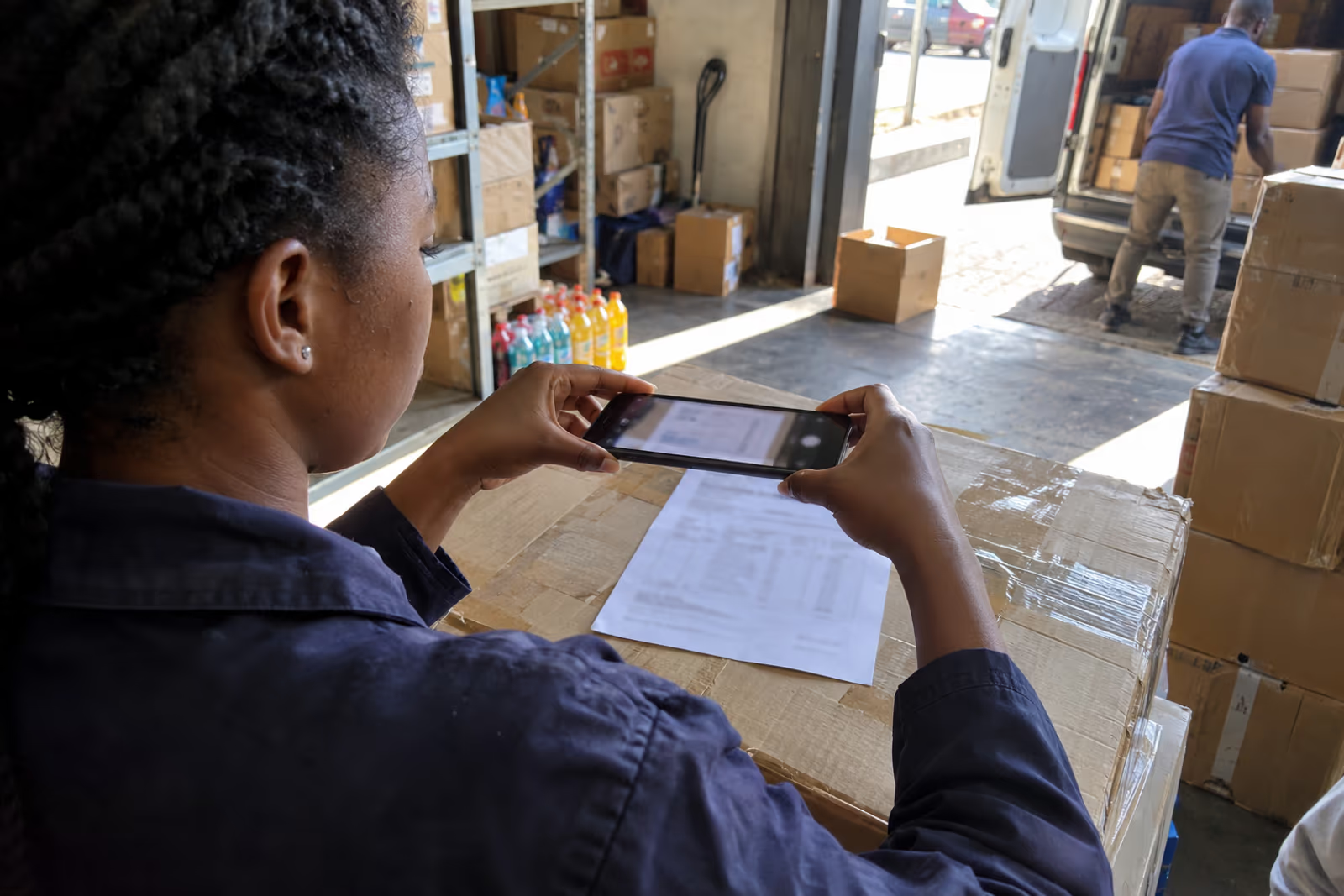
Delivery notes, signed forms and supplier receipts still arrive on paper in most businesses. A phone photo is now enough for AI to read the text, pull out the items and quantities and file the result, which saves typing and makes the paper searchable later.
Stock alerts are one of the simplest wins. When sales and deliveries are recorded automatically, the system can warn you before a fast-moving item runs out and point out products that sell slower than usual.

Automating Payment and Loan Reminders
SACCOs, chamas, schools and suppliers all spend time reminding people to pay. Automation can send reminders on the right day through SMS or WhatsApp, and AI can adjust the wording for someone who has paid late once compared with someone who keeps missing payments. Our AI training for banks and SACCOs shows member service and credit staff how to use tools like these without exposing member data.
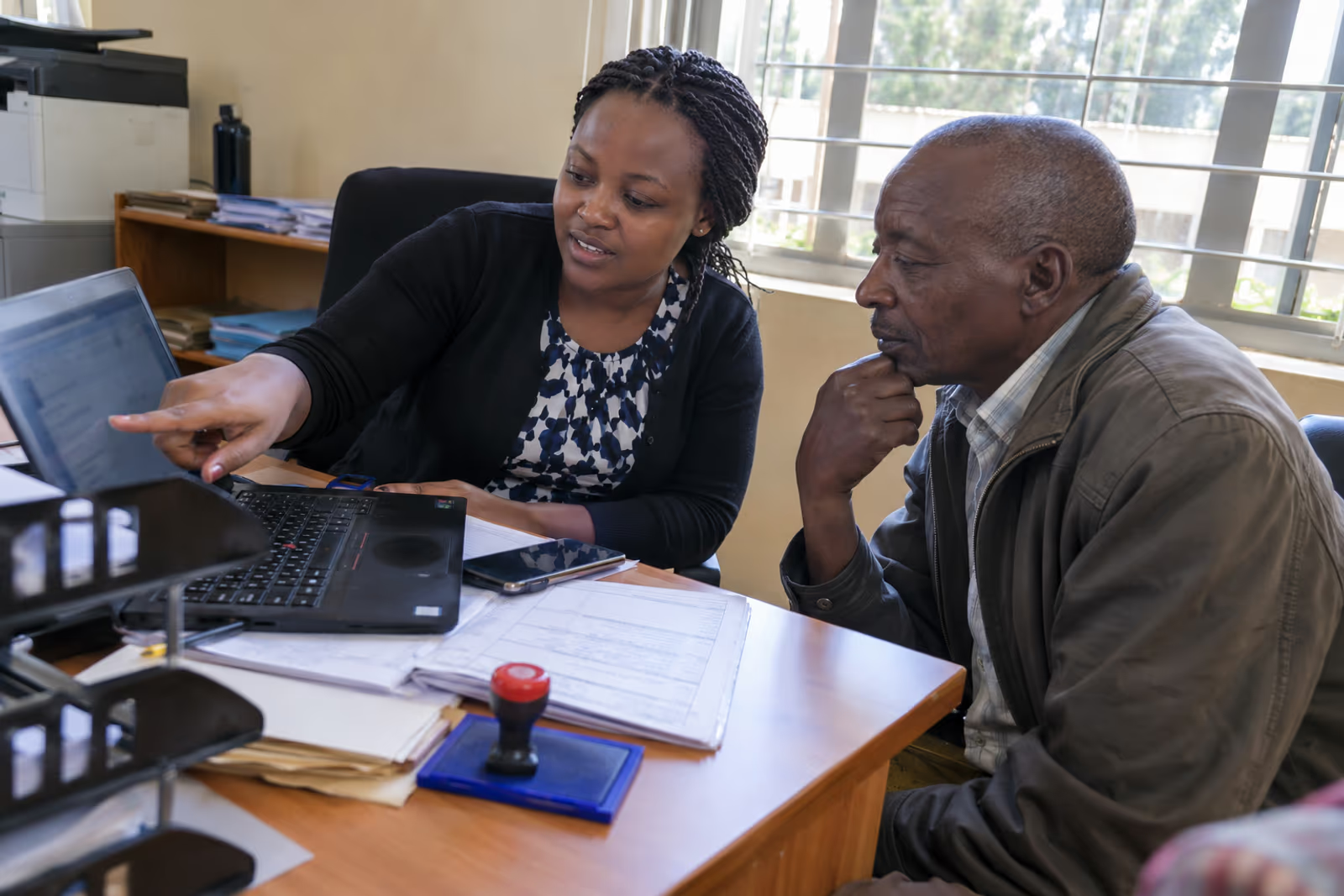
Be careful when automation starts making decisions about people. Under section 35 of the Kenya Data Protection Act, 2019, a person has the right not to be subject to a decision based only on automated processing when it seriously affects them, such as refusing a loan. Let the system prepare the information and keep a person responsible for the decision.
How Much AI Automation Costs in Kenya
The cost has three parts: setting it up, the tools and messages you pay for every month, and someone to keep it working when something changes.
WhatsApp is the cost most businesses underestimate. According to Meta's pricing page, from 1 October 2026 each business number gets 1,000 free service replies a month, and Meta charges for every reply after that. Kenyans.co.ke puts the Kenyan rate at about KSh 0.52 per reply. A business that sends 10,000 replies in a month pays for 9,000 of them, about KSh 4,680, while marketing messages cost about KSh 3.20 to 3.30 each.
AI replies cost more again. Meta's own AI agent on WhatsApp is charged by usage, which Meta estimates at about 4 to 5 US cents per message, roughly ten times the cost of a normal reply. If you use another AI model, you pay its usage fees instead, so estimate how many messages you expect before you choose.
| Cost | What to expect | How to keep it down |
|---|---|---|
| WhatsApp service replies | Free for the first 1,000 a month per number, then about KSh 0.52 each | Answer simple questions with fixed replies, not AI |
| Marketing messages | About KSh 3.20 to 3.30 each | Send fewer, better targeted messages |
| AI usage | Charged per message or per amount of text | Use AI only for the steps that need it |
| M-Pesa integration | A developer's time, quoted per project | Start with one payment type |
| Upkeep | Fixes when prices, menus or rules change | Keep one person responsible for the system |
Build costs vary widely. As one example, a Kenyan agency, Zama Web Experts, quotes KSh 200,000 to 500,000 for handling paybill payments through Daraja and KSh 150,000 to 450,000 more for a full reconciliation layer. Simpler automations that connect tools you already use cost far less, so get the scope written down before you compare prices.
Doing It Yourself or Hiring Help
You can do more yourself than you might think. No-code automation tools connect apps such as Google Sheets, email and forms without programming, and many have free or low-cost plans that are enough to test one process. The WhatsApp Business app also has quick replies and away messages that cost nothing.
Hire help when money or tax is involved. M-Pesa integration through Daraja and eTIMS integration both need a developer or a KRA-verified integrator, and mistakes there cost real money. The same applies when the system will handle customer data at scale, because the Data Protection Act applies to it.
If you would rather have it built for you, AI workflow automation is where EddyLabs designs and builds the system with your team, usually in 2 to 8 weeks, with the scope and price agreed before any work begins.
What Can Go Wrong With Automation
Automation makes a good process faster, and it makes a bad process fail faster. A field experiment with Kenyan entrepreneurs by researchers from Harvard Business School and UC Berkeley gave business owners a GPT-4 business mentor on WhatsApp. On average it made no clear difference, but owners who were already doing well may have gained more than 15%, while those who were struggling did nearly 10% worse. The difference came from which advice they chose to act on.
Other failures are more ordinary. Payments get matched to the wrong customer, a chatbot promises a discount nobody approved, staff stop checking because the system is usually right, and monthly costs grow quietly as message volumes rise. Each of these is avoidable if someone owns the system and reviews it every week.
Data is the last risk. Customer phone numbers, payments and messages are personal data, so collect only what you need, tell customers how you use it and choose tools that keep it secure.
Will Automation Replace Jobs in Kenya?
Fewer than the headlines suggest. The World Bank's World Development Report 2026 estimates that 4.5% of jobs in low and middle income countries are at risk of automation by generative AI, against 14.2% in high-income countries, and that 16.2% could become more productive with AI.
The jobs most exposed are clerical ones, according to the ILO's global index, which means data entry, filing and routine reconciliation, exactly the tasks in this guide. The ILO also warns that exposure is not the same as job loss. In practice, the people in those roles usually move to checking, fixing exceptions and dealing with customers, if they are trained for it.
Some Kenyan employers are already preparing. Safaricom required every employee, whatever their role, to complete AI 101 training, and corporate AI training does the same for smaller teams. If you want to build automations yourself, our AI automation course teaches you to automate one task from your own job, with no coding.
How to Automate Your First Process
- Pick one task you repeat every day and that costs you time or money when it is late.
- Write down every step the way your staff do it today, including the exceptions.
- Measure it for a week: how long it takes and how often it goes wrong.
- Automate the predictable steps first and add AI only where the work varies.
- Keep a person checking the results every day for the first month.
- Compare the new numbers with the old ones before you automate anything else.
If you are not sure which task to start with, our guide to AI solutions for small businesses in Kenya describes nine places to begin.
Common Questions About Business Process Automation
What is the difference between automation and AI automation?
Automation follows fixed rules, such as sending a receipt when a payment arrives. AI automation adds a step that can read messages, documents or photos and make a first judgement, such as working out which invoice a payment belongs to.
Which business process should I automate first?
Choose a task you repeat every day that follows a pattern and costs you money or customers when it is late. For most Kenyan businesses that is M-Pesa reconciliation or WhatsApp replies.
How much does it cost to automate WhatsApp replies in Kenya?
On the WhatsApp Business Platform, each number gets 1,000 free service replies a month from 1 October 2026, then about KSh 0.52 per reply. AI replies cost more, and the build cost depends on what the system has to do.
Can I automate M-Pesa reconciliation?
Yes. Safaricom's Daraja API can send payment details to your system as they arrive, and a daily check can compare them with your records. Payments with wrong references are where AI helps, with a person approving its suggestions.
Is automated decision making legal in Kenya?
It can be, but section 35 of the Data Protection Act gives people the right not to be subject to a decision based only on automated processing when it seriously affects them. Keep a person responsible for decisions such as loans or hiring.
Can EddyLabs automate a process for my business?
Yes. EddyLabs builds AI workflows and WhatsApp assistants for businesses in Kenya, usually in 2 to 8 weeks. The first call is free and takes 30 minutes, and the scope and price are agreed before work begins. See AI workflow automation for details.
Getting Your First Workflow Automated
Start small and measure. One process that saves an hour a day, every day, is worth more than ten tools that nobody opens after the first week.
When you are ready, AI workflow automation builds the system with your team, and AI strategy consulting helps you choose the right process first. To understand the national picture, read our guide to AI strategy for businesses in Kenya.
Sources
- Meta: pricing on the WhatsApp Business Platform
- Kenyans.co.ke: what Kenyan businesses pay for WhatsApp messages
- KRA: eTIMS system to system integration
- Noria Technologies: M-PESA integration guide
- Zama Web Experts: M-Pesa Daraja API integration costs
- Harvard Business School: generative AI and Kenyan entrepreneurs
- World Bank: World Development Report 2026
- ILO: generative AI and jobs, a refined global index
- Safaricom: why every employee had to learn AI
- Kenya Data Protection Act, 2019